Slow Cooker Tomato Soup Recipe (Guide)
Ah, tomato soup-the ultimate comfort food. There’s something so soothing about a warm, velvety bowl of tomato soup, especially on a crisp autumn evening or when you’re feeling under the weather. It’s the kind of dish that hugs you from the inside out, evoking memories of childhood lunches or cozy dinners with grilled cheese sandwiches. But here’s the best part: making it in a slow cooker transforms this classic into something effortless, yet deeply flavorful. By letting the ingredients simmer slowly, the flavors meld beautifully, creating a rich, aromatic, and comforting soup that tastes like it’s been made with hours of care, even if you barely lift a finger.
This guide will walk you through a detailed slow cooker tomato soup recipe, from ingredient lists to tips, swaps, and customization ideas, ensuring that your soup comes out perfect every single time. Whether you’re a seasoned home cook or just getting your feet wet in the kitchen, this is your go-to blueprint for making a soup that’s rich, creamy, and downright irresistible.
Slow Cooker Tomato Soup Recipe
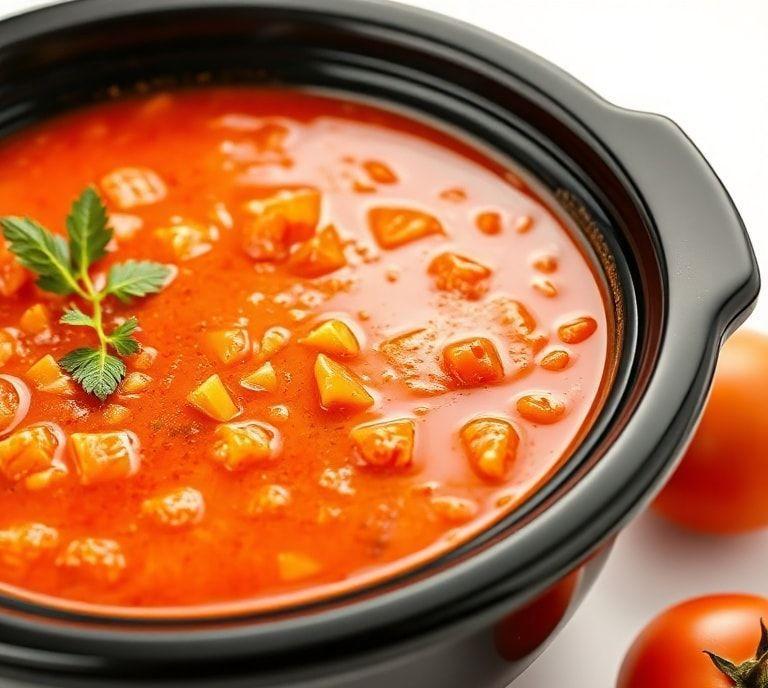
Making tomato soup in a slow cooker is both simple and rewarding. The beauty of slow cooking is that it allows tomatoes, herbs, and spices to develop deep, nuanced flavors over time. This recipe is rich without being heavy, tangy without being sour, and smooth without being bland. It’s a base that works perfectly as-is or can be dressed up with endless additions to match your personal taste.
Ingredient List
Here’s everything you’ll need to make a classic, hearty slow cooker tomato soup:
- Fresh or canned tomatoes – about 3 pounds fresh (ripe and juicy) or 2 cans (28 oz each) of whole peeled tomatoes
- Onion – 1 large, chopped
- Garlic – 3-4 cloves, minced
- Carrots – 2 medium, peeled and chopped (adds subtle sweetness)
- Celery – 2 stalks, chopped (optional, for depth of flavor)
- Vegetable or chicken broth – 3 cups
- Olive oil or butter – 2 tablespoons (for sautéing veggies)
- Sugar – 1 teaspoon (optional, balances acidity)
- Dried herbs – 1 teaspoon each of thyme and basil, or 1 tablespoon fresh
- Salt and pepper – to taste
- Heavy cream or coconut milk – ½ cup (optional, for creaminess)
- Bay leaf – 1 (optional, adds a subtle herbal note)
Instruction Guide
Here’s a step-by-step guide to creating this soul-soothing tomato soup:
-
Prep Your Vegetables
- Chop the onion, garlic, carrots, and celery into small, uniform pieces. This ensures even cooking and a smooth texture when blended.
-
Sauté for extra flavor (optional but recommended)
- In a skillet, heat olive oil or butter over medium heat.
- Add onion, garlic, carrots, and celery. Cook for about 5-7 minutes until softened and fragrant. This step enhances the depth of flavor in the final soup.
-
Add Ingredients To The Slow Cooker
- Transfer the sautéed vegetables into the slow cooker.
- Add tomatoes (fresh or canned), broth, herbs, salt, pepper, sugar, and bay leaf. Stir gently to combine.
-
Cook Low And Slow
- Cover and cook on low for 6-8 hours or high for 3-4 hours.
- During this time, the tomatoes will break down and meld beautifully with the other ingredients.
-
Blend For Smoothness
- Remove the bay leaf.
- Use an immersion blender directly in the slow cooker or transfer the soup in batches to a blender. Blend until smooth and creamy.
-
Add Creaminess (optional)
- Stir in heavy cream or coconut milk for a richer, velvety texture. Adjust salt and pepper as needed.
-
Serve
- Ladle into bowls and garnish with fresh basil, a drizzle of olive oil, or a sprinkle of Parmesan cheese. Pair with crusty bread or a grilled cheese sandwich for the ultimate comfort meal.
Ingredient Swaps
Flexibility is key in slow cooker cooking. Here are some easy ingredient swaps to suit dietary preferences or pantry availability:
- Tomatoes: Canned fire-roasted tomatoes for a smoky flavor; cherry tomatoes for a sweeter, tangy twist
- Broth: Use vegetable broth for a vegetarian version or bone broth for extra richness
- Cream: Coconut milk for a dairy-free alternative; cashew cream for a nutty, smooth texture
- Herbs: Oregano, parsley, or tarragon instead of thyme or basil
- Sweeteners: Honey, maple syrup, or omit sugar altogether if tomatoes are naturally sweet
Helpful Tips
Here are some tips to ensure your slow cooker tomato soup turns out perfect every time:
- Use ripe tomatoes – The riper the tomato, the sweeter and more flavorful the soup.
- Layer flavors – Sautéing vegetables beforehand creates a richer taste than tossing everything in raw.
- Don’t skip the slow cook – The longer cook time develops depth and complexity.
- Adjust acidity – If your soup tastes too tart, add a pinch of sugar or a small splash of cream.
- Consistency control – For thicker soup, reduce the broth slightly; for thinner soup, add extra broth or water.
Customization Ideas
Tomato soup is a blank canvas. Here are ways to make it uniquely yours:
- Spicy kick – Add red pepper flakes or a dash of hot sauce while cooking.
- Cheesy swirl – Stir in shredded cheddar, Gruyère, or Parmesan before serving.
- Vegetable boost – Add roasted red peppers, zucchini, or butternut squash for added flavor and nutrition.
- Protein addition – Top with shredded rotisserie chicken or crispy bacon bits.
- Herbal infusion – Fresh basil, dill, or cilantro added at the end brightens up the flavor.
FAQs
What Ingredients Do I Need To Make Slow Cooker Tomato Soup?
You typically need fresh or canned tomatoes, onion, garlic, vegetable or chicken broth, olive oil, salt, pepper, and optional herbs like basil or thyme. Some recipes also include cream, sugar, or carrots for added sweetness and texture.
Can I Use Canned Tomatoes Instead Of Fresh Ones?
Yes, canned tomatoes are a convenient alternative to fresh tomatoes. They often provide consistent flavor and require less prep. Choose high-quality, whole or diced canned tomatoes for the best results.
How Long Should I Cook Tomato Soup In A Slow Cooker?
Cooking time can vary, but generally, you should cook the soup on low for 6-8 hours or on high for 3-4 hours. This allows the flavors to fully develop and the tomatoes to soften thoroughly.
Do I Need To Sauté The Onions And Garlic Before Adding Them To The Slow Cooker?
Sautéing is optional but recommended. Cooking onions and garlic first enhances their flavor and adds depth to the soup. However, you can skip this step for a simpler preparation.
Can I Make This Soup Vegan Or Dairy-free?
Yes, to make it vegan, use vegetable broth and omit any cream or replace it with coconut milk or cashew cream. Ensure that any additional ingredients, like croutons or seasonings, are also vegan-friendly.
How Can I Thicken My Slow Cooker Tomato Soup?
You can thicken the soup by blending it until smooth, adding a small amount of cornstarch or flour mixed with water, or incorporating cooked vegetables like potatoes or carrots. Let it simmer for an additional 15-20 minutes to reach the desired consistency.
Is It Safe To Leave Tomato Soup In The Slow Cooker All Day?
Yes, using the low heat setting is safe for extended cooking times, but avoid leaving it on high for more than the recommended 4 hours to prevent overcooking or burning. Always ensure your slow cooker is in good working condition.
Can I Freeze Slow Cooker Tomato Soup?
Yes, tomato soup freezes well. Allow the soup to cool completely, then transfer it to airtight containers or freezer-safe bags. It can be frozen for up to 3 months. Reheat gently on the stove or in the microwave.
Should I Blend The Soup Before Serving?
Blending is optional, depending on the texture you prefer. For a creamy, smooth soup, use an immersion blender directly in the slow cooker or transfer the soup in batches to a countertop blender. For a chunkier texture, serve without blending.
What Toppings Or Additions Work Well With Slow Cooker Tomato Soup?
Popular toppings include fresh basil, croutons, grated Parmesan, a drizzle of olive oil, or a swirl of cream or coconut milk. You can also add roasted vegetables or cooked beans for extra flavor and nutrition.