Corned Beef Cabbage Carrots And Potatoes Slow Cooker Recipe (Guide)
If there’s one dish that just screams comfort food, it’s a hearty plate of corned beef, cabbage, carrots, and potatoes. This classic combination has roots in Irish cuisine and has become a beloved staple in many households, especially around St. Patrick’s Day-but truth be told, it’s perfect for any day you’re craving something warm, savory, and ridiculously satisfying.
The beauty of this meal is in its simplicity and the way flavors meld together over time. By cooking everything in a slow cooker, you get tender, flavorful meat that practically falls apart, vegetables that soak up the rich broth, and a whole lot of aroma filling your kitchen. Slow cooking isn’t just convenient; it’s transformative. It turns humble ingredients into a feast that feels like it took hours of effort, even when it didn’t.
So if you’ve been intimidated by corned beef in the past, or if you’re just looking for a hands-off, soul-soothing dinner, stick around. We’re about to break this classic dish down step by step, including ingredient swaps, customization tips, and tricks to make it your own.
Corned Beef Cabbage Carrots And Potatoes Slow Cooker Recipe
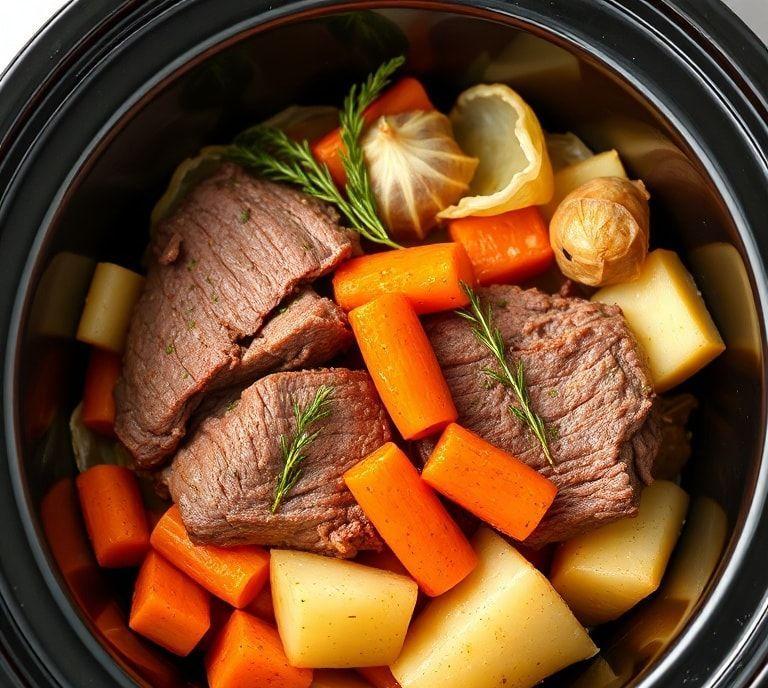
This recipe is all about layering flavors and letting time do the work. You’ll end up with tender corned beef, earthy potatoes, sweet carrots, and cabbage that’s soft but not mushy. The slow cooker method ensures you get consistent results every time-no guesswork, just deliciousness.
Ingredient List
Here’s everything you’ll need to get started:
- Corned beef brisket (about 3-4 pounds, ideally with spice packet included)
- Carrots (4-6 medium, peeled and cut into chunks)
- Potatoes (5-6 medium, peeled or scrubbed, cut into quarters)
- Cabbage (1 medium head, cut into wedges)
- Onion (1 large, sliced into thick rings)
- Garlic (3-4 cloves, minced or smashed)
- Beef broth (2 cups, for extra flavor)
- Water (optional, to cover ingredients halfway if needed)
- Bay leaves (2, for aromatic depth)
- Black peppercorns (1 teaspoon, whole for slow release of flavor)
- Optional spices: mustard seeds, thyme, or allspice for extra complexity
Instruction Guide
Let’s walk through this slow-cooked masterpiece step by step:
-
Prep The Vegetables
- Peel and chop your carrots and potatoes into chunks.
- Slice the onion and cut the cabbage into wedges. Keep in mind that cabbage cooks faster than the other veggies, so we’ll add it later.
-
Prepare The Corned Beef
- Rinse the corned beef under cold water to remove excess brine (optional but helps control saltiness).
- Pat dry with a paper towel.
-
Layer Ingredients In The Slow Cooker
- Place carrots and potatoes at the bottom. They’ll act as a buffer between the meat and the heat source.
- Add the onion on top of the veggies, then place the corned beef brisket on top, fat side up.
- Sprinkle in the spice packet if your corned beef came with one, along with bay leaves and peppercorns.
-
Add Liquids
- Pour in 2 cups of beef broth. If needed, add water to ensure the liquid reaches about halfway up the sides of the meat.
-
Slow Cook
- Cover and cook on low for 8-10 hours or high for 4-5 hours.
- About 1-2 hours before serving, add cabbage wedges on top. This prevents them from turning into mush while still allowing them to soak up flavor.
-
Check For Doneness
- Meat should be fork-tender and vegetables soft but not falling apart.
- Remove bay leaves before serving.
-
Serve And Enjoy
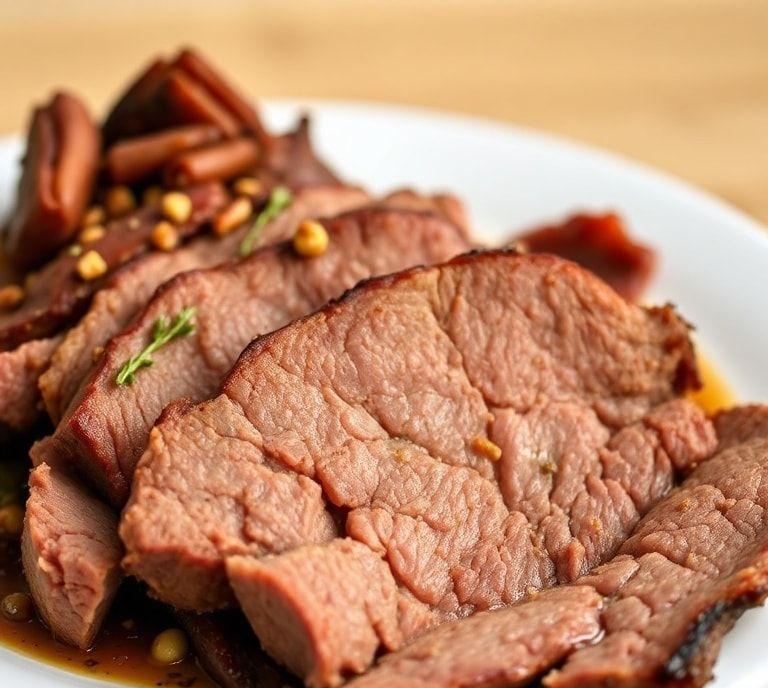
- Slice corned beef against the grain and serve with a generous helping of the vegetables. Ladle some cooking liquid over the top for extra flavor.
Ingredient Swaps
No slow cooker? No problem. Here are some flexible options:
- Potatoes: Yukon Gold or red potatoes hold shape better than russets. Sweet potatoes can add a subtle sweetness.
- Carrots: Parsnips or turnips can work as a root vegetable alternative.
- Cabbage: Napa cabbage or Savoy cabbage gives a slightly different texture and flavor.
- Corned beef: Brisket is traditional, but short ribs or even a pork shoulder can be used in a pinch.
- Broth: Chicken or vegetable broth works if you don’t have beef broth.
Helpful Tips
- Don’t skip rinsing the corned beef-it controls saltiness.
- Cut veggies evenly for consistent cooking.
- Fat side up: This ensures the meat stays moist and helps baste it during cooking.
- Low and slow is key-resist the temptation to crank the heat. The flavors develop much better on low.
- Rest the meat for 10 minutes after cooking before slicing-it keeps juices from running out.
Customization Ideas
Want to put a personal twist on this classic? Try:
- Spice it up: Add a teaspoon of smoked paprika or a pinch of chili flakes.
- Herb infusion: Fresh rosemary, thyme, or dill can elevate the aroma.
- Sweet touch: Toss in a few apple slices or a drizzle of honey over the cabbage for a subtle sweetness.
- Creamy side: Serve with a mustard cream sauce or horseradish for a zing.
- Crockpot layering: Experiment with layering ingredients differently-potatoes on top can make them extra soft and infused with flavor.
FAQs
What Cut Of Corned Beef Is Best For A Slow Cooker Recipe?
The brisket cut of corned beef is ideal for slow cooker recipes because it becomes tender and flavorful when cooked slowly over several hours. It has the right balance of fat and connective tissue that breaks down during slow cooking.
How Long Should I Cook Corned Beef, Cabbage, Carrots, And Potatoes In A Slow Cooker?
Typically, cook on low for 8 to 10 hours or on high for 4 to 6 hours. The exact time may vary depending on the size of the corned beef and the cut of vegetables, but slow cooking ensures the meat is tender and the vegetables are soft.
Do I Need To Rinse The Corned Beef Before Adding It To The Slow Cooker?
Yes, it’s recommended to rinse the corned beef under cold water to remove excess brine and sodium from the curing process. This helps prevent the dish from becoming overly salty.
Should Vegetables Be Added At The Same Time As The Corned Beef?
No, root vegetables like carrots and potatoes can be added at the start, but cabbage should typically be added during the last 1-2 hours of cooking to prevent it from becoming too mushy.
Can I Use Frozen Vegetables In This Slow Cooker Recipe?
Yes, frozen vegetables can be used, but they may release extra water during cooking. Adjust seasoning and cooking time accordingly to prevent a watery final dish.
What Seasonings Enhance The Flavor Of Corned Beef Cooked In A Slow Cooker?
Traditional seasonings include garlic, onion, bay leaves, black peppercorns, mustard seeds, and allspice. Many corned beef packages also come with a spice packet, which can be added directly to the slow cooker.
Can This Recipe Be Made In Advance And Reheated?
Yes, slow-cooked corned beef with vegetables reheats well. Store leftovers in an airtight container in the refrigerator for up to 3-4 days, and reheat gently on the stovetop or in a microwave to maintain tenderness.
Is It Possible To Reduce The Sodium Content In This Recipe?
Yes, rinse the corned beef before cooking and use low-sodium broth or water instead of the brine. Additionally, avoid adding extra salt until tasting at the end, as the corned beef already contains salt from curing.
Can I Make This Recipe In A Pressure Cooker Instead Of A Slow Cooker?
Yes, a pressure cooker can reduce cooking time significantly. Typically, corned beef and vegetables cook in 90 minutes under high pressure, but vegetables should be added midway or adjusted to prevent overcooking.
How Can I Tell When The Corned Beef And Vegetables Are Done?
The corned beef should be fork-tender and easily sliceable. Potatoes and carrots should be soft when pierced with a fork, and cabbage should be tender but not mushy. Cooking times may vary slightly depending on the slow cooker model.