Standing Rib Roast Slow Cooker Recipe (Guide)
Ah, the standing rib roast-a true showstopper of a dish. Often reserved for special occasions and holidays, this cut of beef is celebrated for its rich marbling, tender texture, and deep, beefy flavor that seems to melt in your mouth. Traditionally roasted in the oven, the idea of cooking it in a slow cooker might raise an eyebrow or two-but hear me out.
Using a slow cooker for your standing rib roast is a total game-changer. You get all the depth of flavor from slow, gentle cooking without the stress of watching the oven or worrying about overcooking. It’s perfect for anyone who wants a juicy, tender roast that practically falls apart, but with minimal effort. Plus, it gives you extra time to focus on sides, desserts, or simply enjoying your guests’ reactions when the roast comes to the table.
Think of it as turning your slow cooker into a tiny, magical beef haven. The meat slowly absorbs flavors from aromatics, herbs, and a touch of liquid, creating a symphony of taste that’s rich, comforting, and downright irresistible.
Standing Rib Roast Slow Cooker Recipe
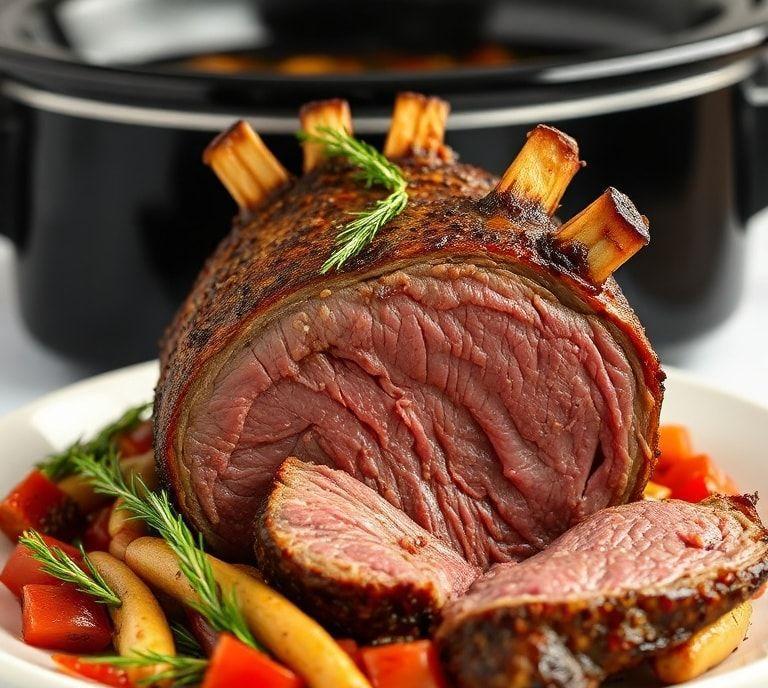
Here’s the deal: cooking a standing rib roast in a slow cooker requires a little prep, but the reward is worth it. By using low and slow heat, the roast becomes tender and juicy, with a flavorful crust if you sear it beforehand. This method works especially well for smaller roasts, as larger ones may need a little extra time or a combination of slow cooking and oven finishing.
The beauty of this recipe lies in its flexibility. You can customize the seasoning, add vegetables directly into the cooker for a one-pot meal, and even play with different liquid bases-beef broth, wine, or a combination-to deepen the flavor.
Ingredient List
For a classic slow cooker standing rib roast, here’s what you’ll need:
For The Roast
- 3-5 lb standing rib roast (bone-in or boneless, depending on preference)
- 2-3 tbsp olive oil or softened butter
- 4-5 garlic cloves, minced
- 1-2 tsp sea salt (adjust to taste)
- 1 tsp black pepper
- 1 tsp smoked paprika or regular paprika (optional, for a smoky undertone)
- 1 tsp dried rosemary
- 1 tsp dried thyme
For The Slow Cooker Base
- 1 large onion, sliced
- 3-4 carrots, peeled and cut into chunks
- 3-4 celery stalks, cut into chunks
- 1-2 cups beef broth (or a mix of broth and red wine for extra depth)
- Optional: 2 bay leaves for aromatic infusion
Instruction Guide
Here’s the step-by-step process to achieve a perfectly tender, flavorful roast:
-
Prep The Roast
- Pat the standing rib roast dry with paper towels. This helps create a beautiful crust when seared.
- Rub the roast with olive oil or butter, then coat evenly with garlic, salt, pepper, paprika, rosemary, and thyme.
-
Optional Searing (Highly Recommended)
- Heat a large skillet over medium-high heat.
- Sear the roast for 2-3 minutes on each side until browned. This step locks in juices and adds a rich, caramelized flavor.
-
Prepare The Slow Cooker
- Layer the onions, carrots, and celery at the bottom of the slow cooker.
- Pour in 1-2 cups of beef broth (or broth + wine), enough to cover the vegetables but not submerge the meat.
-
Cook The Roast
- Place the seared roast on top of the vegetables.
- Cover and cook on LOW for 6-8 hours (or until the internal temperature reaches 130°F for medium-rare, 140°F for medium).
- Check occasionally; slow cookers vary, so adjust cooking time as needed.
-
Rest The Roast
- Remove the roast and let it rest for 15-20 minutes before slicing. This allows juices to redistribute, keeping the meat tender.
-
Optional Gravy
- Use the juices and vegetables in the slow cooker to make a delicious gravy. Blend or mash vegetables, strain if desired, and simmer with a bit of cornstarch slurry for thickness.
Ingredient Swaps
Don’t have everything on hand? No problem! Here are some flexible swaps:
- Herbs: Swap rosemary and thyme for sage, oregano, or Italian seasoning.
- Vegetables: Potatoes, parsnips, or bell peppers can replace or supplement the classic onion-carrot-celery mix.
- Liquid: Chicken or vegetable broth works in a pinch; for deeper flavor, use a splash of balsamic vinegar or Worcestershire sauce.
- Seasoning: Garlic powder or onion powder can replace fresh garlic if needed.
Helpful Tips
- Size Matters: Ensure your slow cooker can comfortably hold the roast. Smaller roasts work best.
- Check Temperature: Use a meat thermometer to avoid overcooking. Slow cookers vary widely in heat.
- Don’t Skip Searing: While optional, searing greatly improves flavor and texture.
- Layer Wisely: Keep vegetables under the roast to prevent burning and to soak up the delicious drippings.
- Rest is Key: Cutting the roast too soon lets all those precious juices escape.
Customization Ideas
Make this recipe your own with a few tweaks:
- Herb-Crusted Roast: Add fresh parsley, sage, and thyme for an extra fragrant crust.
- Wine Infusion: Replace half of the broth with red wine for a deeper, richer flavor.
- Spicy Kick: Add a pinch of cayenne or chili flakes to the rub for some heat.
- Garlic Lovers: Insert slivers of garlic directly into small cuts in the roast for an intense garlic flavor.
- One-Pot Meal: Toss in potatoes, parsnips, or mushrooms halfway through cooking for a complete dinner.
FAQs
Can I Cook A Standing Rib Roast In A Slow Cooker?
Yes, a standing rib roast can be cooked in a slow cooker. Slow cooking allows the meat to become tender while retaining its flavor, although it may not develop the same crust as roasting in an oven. Using a searing step before slow cooking is recommended for added flavor.
What Size Standing Rib Roast Works Best For A Slow Cooker?
A 3 to 6-pound standing rib roast is ideal for most standard slow cookers. Larger roasts may not fit comfortably, while smaller cuts can overcook quickly. Ensure the roast can fit without touching the lid to allow even cooking.
Should I Sear The Standing Rib Roast Before Slow Cooking?
Searing is highly recommended as it enhances flavor through the Maillard reaction, giving the roast a rich, browned exterior. Sear all sides in a hot skillet for 3-5 minutes per side before placing the roast in the slow cooker.
What Liquid Should I Use In The Slow Cooker?
Use a combination of beef broth, red wine, or a mixture of aromatics such as onions, garlic, and herbs. The liquid should cover the bottom of the slow cooker but not submerge the roast, allowing it to braise and stay tender without becoming boiled.
How Long Does It Take To Cook A Standing Rib Roast In A Slow Cooker?
Cooking time varies depending on the size of the roast and the heat setting. Generally, cook on low for 6-8 hours or on high for 4-5 hours for medium-rare. Using a meat thermometer to monitor internal temperature is essential for precise doneness.
What Internal Temperature Should I Aim For?
For medium-rare, the internal temperature should reach 125-130°F (52-54°C) before resting. For medium, aim for 135-140°F (57-60°C). Let the roast rest for at least 15-20 minutes after cooking, as the temperature will rise slightly.
How Do I Make A Flavorful Gravy From The Slow Cooker Drippings?
After removing the roast, strain the liquid to remove solids. Simmer the liquid on the stovetop and thicken it with a slurry of flour or cornstarch mixed with cold water. Adjust seasoning with salt, pepper, and herbs for a rich gravy.
Can I Add Vegetables To The Slow Cooker With The Roast?
Yes, root vegetables such as carrots, potatoes, and parsnips can be added. Place them at the bottom of the slow cooker to absorb flavors from the roast, and cut them into uniform sizes for even cooking. Avoid overloading the slow cooker to ensure proper heat circulation.
Is It Necessary To Cover The Slow Cooker While Cooking?
Yes, keeping the lid on ensures moisture retention and even cooking. Lifting the lid frequently can prolong cooking time and result in a less tender roast.
Can I Make A Standing Rib Roast Ahead Of Time In A Slow Cooker?
You can cook the roast ahead of time, then cool and refrigerate it. Reheat gently in the slow cooker or oven to preserve tenderness. However, for best texture and flavor, it is recommended to serve shortly after cooking and resting.