Slow Cooker Curry Vegetarian Recipe (Guide)
Let’s talk about comfort food that practically cooks itself-slow cooker curry. Imagine walking into your kitchen and being greeted by the rich, aromatic scent of simmering spices, tender vegetables, and creamy coconut milk. There’s something almost magical about the slow cooker; it takes simple ingredients and transforms them into a meal that tastes like it was simmered for hours on a stovetop, yet requires minimal effort from you.
Vegetarian curries, in particular, are an absolute delight. They’re hearty, satisfying, and versatile enough to satisfy both dedicated vegetarians and curious omnivores. The beauty of a slow cooker curry lies in its ability to meld flavors deeply. Each vegetable absorbs the spices, each lentil or chickpea softens to perfection, and the sauce thickens into a luscious, rich consistency.
Whether you’re meal-prepping for the week, looking for a cozy dinner after a long day, or trying to impress friends with minimal effort, this slow cooker vegetarian curry will become your go-to recipe. Plus, it’s endlessly adaptable, so you can experiment with your favorite vegetables, proteins, and spice levels.
Slow Cooker Curry Vegetarian Recipe
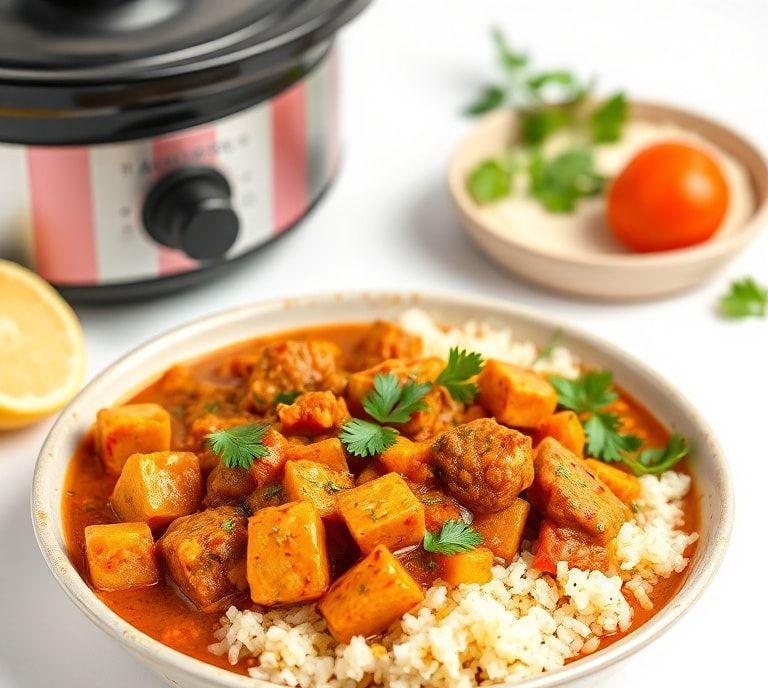
This recipe is designed to be simple, flavorful, and adaptable. The end result is a thick, aromatic curry that is rich in texture and bursting with vibrant flavors. The slow cooker does the heavy lifting, so all you need to do is prep your ingredients and let the magic happen.
- Cooking method: Slow cooker / crockpot
- Servings: 4-6 generous portions
- Cook time: 6-8 hours on low or 3-4 hours on high
- Cuisine: Indian-inspired fusion
Ingredient List
For the best slow cooker curry, gather these ingredients:
-
Vegetables
- 2 medium carrots, sliced
- 1 bell pepper, chopped
- 1 small head of cauliflower, broken into florets
- 1 medium zucchini, sliced
- 1 cup green beans, trimmed
-
Legumes & Protein
- 1 can (15 oz) chickpeas, drained and rinsed
- 1/2 cup red lentils (optional for extra protein and thickness)
-
Aromatics & Base
- 1 medium onion, finely chopped
- 3 cloves garlic, minced
- 1-inch piece of ginger, grated
- 1 can (14 oz) diced tomatoes
-
Liquids
- 1 can (14 oz) coconut milk
- 1 cup vegetable broth
-
Spices & Seasonings
- 2 tsp curry powder
- 1 tsp ground cumin
- 1 tsp ground coriander
- 1/2 tsp turmeric
- 1/2 tsp chili powder (adjust to taste)
- Salt and pepper to taste
- Optional: 1/2 tsp garam masala for finishing
-
Fresh & Garnish
- Fresh cilantro, chopped
- Lime wedges for serving
Instruction Guide
Here’s a step-by-step roadmap to curry perfection:
-
Prep The Vegetables And Aromatics
- Chop all vegetables into bite-sized pieces.
- Mince garlic and grate ginger.
-
Layer Ingredients In The Slow Cooker
- Start with onions, garlic, and ginger at the bottom.
- Add carrots, bell pepper, cauliflower, and zucchini.
- Sprinkle in your spices: curry powder, cumin, coriander, turmeric, and chili powder.
-
Add Liquids And Legumes
- Pour in diced tomatoes, coconut milk, and vegetable broth.
- Stir to combine everything evenly.
- Add chickpeas (and red lentils if using).
-
Cook
- Cover and cook on low for 6-8 hours or high for 3-4 hours.
- Check towards the end; vegetables should be tender but not mushy.
-
Finish And Garnish
- Stir in garam masala if using.
- Adjust salt and pepper.
- Serve hot, garnished with fresh cilantro and a squeeze of lime juice.
Ingredient Swaps
Variety is the spice of life-and curry! Here’s how to adapt ingredients without losing flavor:
- Vegetables: Sweet potatoes, butternut squash, eggplant, or spinach can replace or supplement the existing veggies.
- Protein: Firm tofu or tempeh works beautifully if chickpeas aren’t your thing.
- Liquids: Coconut cream makes the curry extra rich, while vegetable stock keeps it lighter.
- Spices: For a smoky flavor, add a pinch of smoked paprika. For a sweeter undertone, try a small cinnamon stick or a splash of maple syrup.
Helpful Tips
To ensure your slow cooker curry is nothing short of phenomenal:
- Layering matters: Place harder vegetables like carrots and cauliflower at the bottom so they cook evenly.
- Don’t overcook delicate veggies: Add zucchini and green beans halfway through cooking to prevent them from turning mushy.
- Thickening the sauce: If your curry is too thin, remove the lid in the last 30 minutes to allow some liquid to evaporate.
- Spice boost: Toast your spices in a dry skillet for 30-60 seconds before adding them to the slow cooker for extra depth of flavor.
Customization Ideas
Make this curry truly yours:
- Heat factor: Add fresh chili, chili flakes, or a dash of hot sauce.
- Nutty richness: Stir in a spoonful of peanut butter or cashew butter for creamier texture.
- Herb twist: Fresh basil, mint, or Thai basil can give an aromatic change.
- Serving options: Serve over rice, quinoa, or with warm naan bread. Add a dollop of yogurt or vegan yogurt for tanginess.
FAQs
What Are The Best Vegetables To Use In A Slow Cooker Vegetarian Curry?
Root vegetables like potatoes, carrots, and sweet potatoes work well because they hold their shape during long cooking. Other good options include bell peppers, zucchini, cauliflower, peas, and spinach. Combining firm and soft vegetables can create a more balanced texture.
How Long Should I Cook A Vegetarian Curry In A Slow Cooker?
Cooking times vary depending on the slow cooker and ingredients. Generally, cook on low for 6-8 hours or on high for 3-4 hours. Root vegetables may need longer to become tender, while leafy greens or peas should be added in the last 30 minutes to avoid overcooking.
Can I Use Canned Beans In A Slow Cooker Curry?
Yes, canned beans like chickpeas, kidney beans, or lentils can be added directly to the curry. Since they are already cooked, add them during the last hour of cooking to prevent them from becoming mushy.
Do I Need To Sauté Onions And Spices Before Adding Them To The Slow Cooker?
Sautéing onions, garlic, and spices before adding them enhances flavor and releases essential oils, giving the curry a richer taste. However, if you’re short on time, you can add them directly; the flavors will develop more subtly over the long cooking period.
Can I Make This Curry Vegan?
Yes, you can make a vegan version by using coconut milk or tomato-based sauces instead of cream or yogurt, and ensuring no animal-based broths or ghee are included. Nutritional yeast can be used to add a savory, umami flavor if desired.
How Do I Thicken A Slow Cooker Vegetarian Curry?
To thicken, you can simmer the curry uncovered for the last 30-60 minutes, mash some of the vegetables directly in the pot, or add a slurry of cornstarch or flour mixed with water. Coconut milk or yogurt can also provide a creamier, thicker consistency.
Can I Freeze Leftovers Of Slow Cooker Vegetarian Curry?
Yes, most slow cooker curries freeze well. Allow the curry to cool completely, store it in airtight containers, and freeze for up to 3 months. Reheat on the stovetop or in a microwave, adding a little water if it has thickened too much.
How Spicy Should I Make A Slow Cooker Vegetarian Curry?
The spice level depends on your preference. Start with mild spices like turmeric, cumin, and coriander. Add chili powder, fresh chilies, or cayenne gradually. Slow cooking intensifies flavors, so it’s better to start mild and adjust at the end.
Can I Use Pre-made Curry Paste In A Slow Cooker Vegetarian Curry?
Yes, pre-made curry paste is convenient and works well. Use the recommended quantity on the package, and consider sautéing it briefly with onions and garlic before adding to the slow cooker for enhanced flavor. Adjust seasoning to taste during cooking.
What Grains Or Side Dishes Pair Well With Slow Cooker Vegetarian Curry?
Slow cooker curries pair excellently with basmati rice, jasmine rice, or quinoa. Flatbreads like naan or roti also complement the dish. For a complete meal, serve with a side of fresh salad, pickles, or yogurt-based condiments.