Paella Slow Cooker Recipe (Guide)
Ah, paella! The mere mention of it conjures images of vibrant saffron-infused rice, tender morsels of chicken or seafood, and colorful vegetables all mingling in a pan with flavors that seem to dance together. Traditionally, paella is a Spanish dish that demands careful attention, patience, and a big, wide skillet over an open flame. But what if I told you that you could capture all that rich, layered flavor without standing over a hot stove for hours? Enter the slow cooker paella.
This method is a game-changer. It transforms the labor-intensive, high-maintenance dish into a set-it-and-forget-it meal, perfect for busy weeknights or leisurely weekends. The slow cooker’s gentle heat allows the rice to absorb all those incredible spices and broths, while proteins and vegetables meld together beautifully. And the best part? Your house smells like a Spanish fiesta long before the first spoonful hits your plate.
In this guide, I’ll walk you through a foolproof slow cooker paella recipe, ingredient alternatives, expert tips, and ways to customize it to your taste. By the end, you’ll be a paella master-without breaking a sweat.
Paella Slow Cooker Recipe
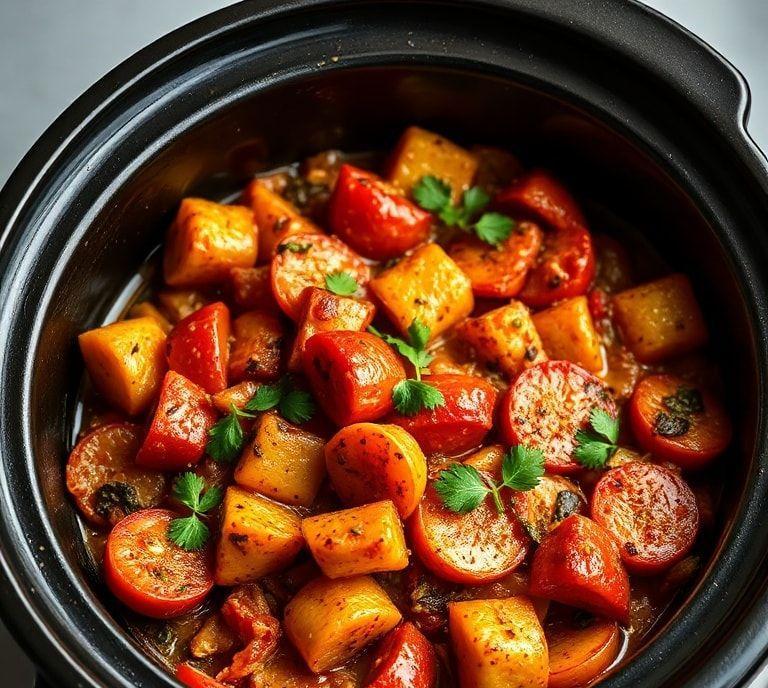
Making paella in a slow cooker is surprisingly simple, but it’s all about layering flavors and cooking at a gentle pace. Here’s the magic formula: a balance of proteins, rice, vegetables, broth, and those essential spices, cooked low and slow until perfectly tender.
Ingredient List
Here’s a comprehensive ingredient list to create a classic, flavorful paella:
Proteins
- 1 lb boneless, skinless chicken thighs, cut into bite-sized pieces
- 8 large shrimp, peeled and deveined
- ½ lb chorizo, sliced
Rice & Grains
- 2 cups Arborio rice (or any short-grain rice)
- 3 ½ cups chicken or vegetable broth
Vegetables & Aromatics
- 1 red bell pepper, diced
- 1 green bell pepper, diced
- 1 small onion, finely chopped
- 3 cloves garlic, minced
- 1 cup frozen peas
- 1 medium tomato, diced
Herbs & Spices
- 1 tsp smoked paprika
- ½ tsp saffron threads, soaked in 2 tbsp warm water
- ½ tsp cayenne pepper (optional, for heat)
- Salt and black pepper to taste
- Fresh parsley, chopped, for garnish
- Lemon wedges, for serving
Optional Add-Ins
- Mussels or clams for seafood paella
- Artichoke hearts for a veggie twist
- White wine (¼ cup) for a deeper flavor
Instruction Guide
Here’s where the magic happens-step by step, slow-cooker style:
-
Prep Your Ingredients
- Chop vegetables, slice chorizo, cut chicken into bite-sized pieces, and peel shrimp. Soak saffron in warm water for maximum flavor.
-
Layer The Flavors
- In the slow cooker, add the chicken, chorizo, onions, garlic, and bell peppers. Sprinkle over paprika, saffron (with its soaking water), cayenne, salt, and pepper.
-
Add Rice And Liquid
- Pour the rice over the top, then add the broth. Stir gently to combine, ensuring spices are evenly distributed but avoid overmixing-you don’t want the rice to get mushy.
-
Cook Low And Slow
- Cover and cook on LOW for 3-4 hours or until the rice is tender and the chicken is fully cooked. Check halfway through to ensure the rice isn’t sticking to the sides.
-
Add Seafood & Peas
- About 30 minutes before the end, nestle in the shrimp and any optional seafood. Sprinkle in the peas. Cover and cook until shrimp are pink and opaque.
-
Finish And Serve
- Give the paella a gentle stir, garnish with chopped parsley, and serve with lemon wedges. The flavors should be rich, aromatic, and deeply satisfying.
Ingredient Swaps
Flexibility is key in a slow cooker, and paella is a perfect dish for experimentation. Here are some swaps to consider:
-
Proteins
- Replace chicken with turkey or firm white fish
- Swap shrimp for scallops or calamari
- Use tofu or tempeh for a vegetarian-friendly version
-
Rice
- Short-grain sushi rice or Valencia rice works too
- Brown rice is possible but will require longer cooking and more liquid
-
Broth
- Vegetable broth for vegetarian versions
- Seafood stock for an even richer taste
-
Vegetables
- Add zucchini, mushrooms, or asparagus
- Use roasted red peppers for a smokier flavor
-
Spices
- Adjust paprika and cayenne based on your heat preference
- Turmeric can mimic saffron in a pinch (though the flavor will be slightly different)
Helpful Tips
To ensure your slow cooker paella comes out perfectly every time:
- Don’t over-stir: The slow cooker is gentle, so the rice absorbs flavors beautifully. Stirring too much can make it mushy.
- Use the right rice: Short-grain rice absorbs liquid better than long-grain varieties, giving the classic creamy texture.
- Layer thoughtfully: Add proteins and vegetables in stages to avoid overcooking delicate items like shrimp.
- Check liquid levels: Slow cookers vary, so make sure the rice is covered. Add a splash of broth if needed.
- Let it rest: After cooking, let the paella sit for 5-10 minutes with the lid off. This allows the flavors to settle and the rice to firm up slightly.
Customization Ideas
Paella is wonderfully adaptable. Here are some ways to make it your own:
- Mediterranean Veggie: Swap meats for olives, roasted red peppers, and artichoke hearts.
- Spicy Chorizo Lover: Add extra chorizo and red pepper flakes for a fiery twist.
- Seafood Extravaganza: Use mussels, clams, shrimp, and firm white fish for a decadent seafood feast.
- Herb Explosion: Mix in fresh basil, thyme, or oregano for a fragrant variation.
- One-Pot Fiesta: Serve over a bed of greens or top with avocado slices for a fresh, modern take.
FAQs
Can I Make Authentic Paella In A Slow Cooker?
Yes, you can make paella in a slow cooker, but achieving the traditional socarrat-the crispy bottom layer-can be challenging. Slow cookers are ideal for infusing flavors and cooking ingredients evenly, but they don’t produce the high, direct heat that traditional paella pans use.
What Type Of Rice Is Best For Slow Cooker Paella?
Short-grain rice, such as Bomba or Arborio, is best for slow cooker paella because it absorbs liquid evenly and retains a slightly firm texture without becoming mushy. Long-grain rice tends to produce a less cohesive dish.
How Much Liquid Should I Use In A Slow Cooker Paella?
A general guideline is to use about 2 to 2.5 cups of liquid for every 1 cup of rice. Since slow cookers trap moisture, you might need slightly less liquid than stovetop recipes to avoid overly soft rice.
Can I Use Frozen Seafood In A Slow Cooker Paella?
Yes, but it’s best to thaw seafood first to prevent excess water from diluting the flavors. Add seafood in the last 30-60 minutes of cooking to prevent it from overcooking and becoming rubbery.
How Long Should I Cook Paella In A Slow Cooker?
Cooking time depends on the setting. On low, 3-4 hours is typical, while on high, 1.5-2 hours may be sufficient. Check the rice texture and liquid absorption periodically to avoid overcooking.
Do I Need To Sauté Ingredients Before Adding Them To The Slow Cooker?
Sautéing onions, garlic, peppers, and meats before adding them to the slow cooker enhances flavor through caramelization and Maillard reactions. While optional, it improves depth and richness of the paella.
Can I Make Vegetarian Or Vegan Paella In A Slow Cooker?
Absolutely. Replace meat and seafood with a mix of vegetables like bell peppers, artichokes, peas, and tomatoes, and use vegetable broth instead of chicken or seafood stock. Adjust cooking time so vegetables remain tender but not mushy.
How Do I Prevent The Rice From Becoming Mushy In A Slow Cooker?
Use the correct type of rice, measure liquids carefully, and avoid overcooking. Resist lifting the lid frequently, as this releases heat and can disrupt the cooking process. Checking rice near the end of the recommended cooking time is sufficient.
Can I Use Saffron In Slow Cooker Paella?
Yes, saffron is highly recommended for authentic flavor and color. To maximize its aroma, steep saffron threads in a small amount of warm liquid before adding it to the slow cooker, ensuring the spice is evenly distributed.
Can I Prepare Paella In Advance And Reheat It?
Yes, paella can be made ahead and stored in the refrigerator for up to 2 days. Reheat gently on the stovetop or in the slow cooker on low heat, adding a small amount of liquid if necessary to restore moisture and texture.