
German Sauerkraut Slow Cooker Recipe (Guide)
Ah, sauerkraut. That tangy, slightly sour cabbage dish that has somehow managed to carve a permanent place in kitchens worldwide! Traditionally associated with German cuisine, sauerkraut is more than just a side dish-it’s a flavor-packed, probiotic-rich powerhouse that pairs beautifully with hearty meats, sausages, and even vegetarian meals. While many people shy away from making it at home because of the ’fermentation’ factor, cooking sauerkraut is actually surprisingly simple, especially when you enlist the help of a slow cooker.
A slow cooker transforms the cabbage into a tender, flavorful delight without the need to hover over the stove for hours. The gentle, slow heat allows the flavors to meld and develop, making every bite a rich, comforting experience. Today, I’ll take you on a culinary journey through a German-inspired slow cooker sauerkraut recipe that’s both traditional and adaptable. Trust me, once you make it this way, you’ll wonder why you ever relied on the canned version.
German Sauerkraut Slow Cooker Recipe
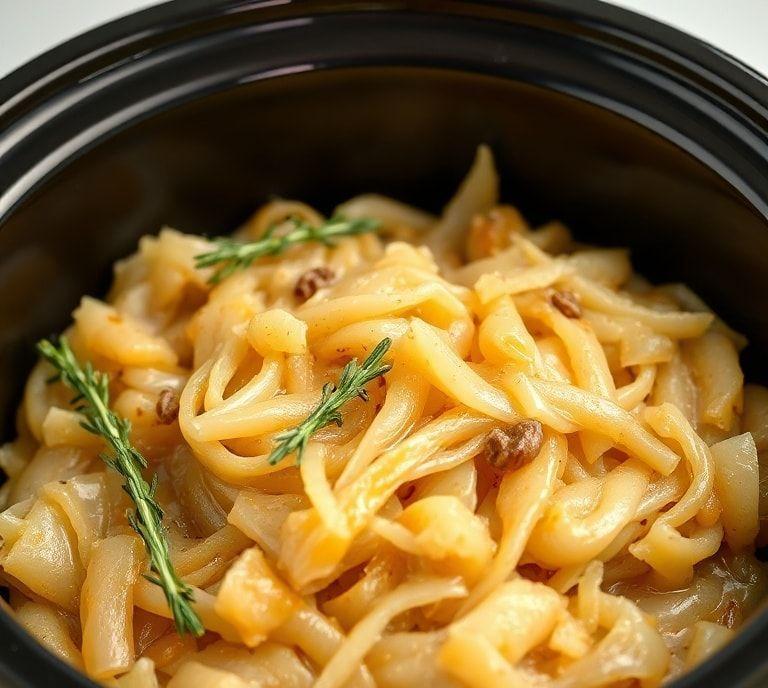
This recipe brings together the essence of German flavors with the ease of modern cooking. Think tender, tangy cabbage infused with savory aromatics, a touch of sweetness, and the hearty depth of smoked or cured meats if you choose. It’s perfect for cozy dinners, festive gatherings, or simply adding a flavorful, gut-friendly side to your weeknight meals.
Ingredient List
Here’s what you’ll need to bring this slow cooker magic to life:
- Sauerkraut – 32 oz (about one large jar or bag), well-drained if overly watery
- Pork (optional) – smoked sausage, bratwurst, or bacon, chopped into bite-sized pieces for richness
- Onion – 1 medium, finely sliced
- Apple – 1 medium, peeled and thinly sliced for a subtle sweetness that balances the tang
- Caraway seeds – 1-2 teaspoons, for that classic German flavor
- Garlic – 2-3 cloves, minced
- Chicken or vegetable broth – 1 cup, to keep everything moist and flavorful
- Butter or olive oil – 2 tablespoons, for sautéing and adding depth
- Bay leaf – 1-2, optional but adds aromatic complexity
- Black pepper – to taste
- Brown sugar or maple syrup – 1-2 teaspoons, optional, for a touch of caramelized sweetness
- Fresh herbs – thyme or parsley, for garnish
Instruction Guide
Let’s break it down step by step so you don’t miss a beat:
-
Prep Your Ingredients
- Slice the onion and apple, chop your meat if using, and mince the garlic.
- Drain excess liquid from the sauerkraut if it’s too watery; you want flavor, not a swampy slow cooker.
-
Sauté For Flavor
- In a skillet, heat butter or olive oil over medium heat.
- Sauté onions and garlic until translucent and fragrant. This step boosts flavor dramatically!
-
Layer In The Slow Cooker
- Place half the sauerkraut at the bottom, then add your sautéed onions and garlic, apple slices, caraway seeds, and meat (if using).
- Top with the remaining sauerkraut.
-
Add Liquids And Seasonings
- Pour in the broth, sprinkle black pepper, add the bay leaf, and brown sugar if desired.
-
Cook Low And Slow
- Cover and cook on low for 6-8 hours or high for 3-4 hours.
- The sauerkraut should be tender, flavorful, and slightly sweet from the apples.
-
Finish And Serve
- Remove the bay leaf. Taste and adjust seasonings.
- Garnish with fresh herbs if you like, and serve warm.
Ingredient Swaps
Don’t panic if you’re missing an ingredient-there’s flexibility here:
- Meat: Swap pork for chicken, turkey sausage, or keep it vegetarian with mushrooms or tempeh.
- Broth: Vegetable broth, water, or even a splash of white wine works beautifully.
- Sweetener: Honey, agave, or skip entirely for a more traditional tang.
- Caraway seeds: Fennel seeds or mustard seeds can be an interesting twist.
- Apple: Pears or a few dried apricots for a subtle sweetness if apples aren’t available.
Helpful Tips
Maximize flavor and simplify the process with these tips:
- Don’t skip sautéing onions and garlic – it adds a caramelized depth that transforms the dish.
- Taste as you go – sauerkraut varies in saltiness; adjust seasonings accordingly.
- Layering matters – placing the sauerkraut on top and bottom keeps the flavors balanced.
- Leftovers improve overnight – flavors meld even more after sitting in the fridge.
- Freeze for later – this dish freezes well, so batch-cook for busy weeks.
Customization Ideas
Make this dish your own with a few creative tweaks:
- Spicy twist: Add a pinch of red pepper flakes or diced jalapeño.
- Smoky depth: Incorporate smoked paprika or smoked meats.
- Vegetable boost: Toss in diced carrots, bell peppers, or cabbage variations.
- Tang enhancement: Splash in a little apple cider vinegar at the end for brightness.
- Herb infusion: Dill or rosemary can bring a fresh, unexpected note.
FAQs
What Ingredients Are Typically Used In A German Sauerkraut Slow Cooker Recipe?
A traditional German sauerkraut slow cooker recipe usually includes sauerkraut, onions, garlic, apples, bacon or sausage, caraway seeds, bay leaves, black pepper, and occasionally a bit of brown sugar or apple cider for sweetness. Some variations also include potatoes or smoked meats for added flavor.
How Do I Prepare Sauerkraut For The Slow Cooker?
Rinse the sauerkraut lightly under cold water if you prefer a milder flavor, then drain thoroughly. Some recipes suggest squeezing out excess liquid to avoid excess moisture in the slow cooker. You can also chop the sauerkraut to achieve a finer texture.
Can I Use Fresh Cabbage Instead Of Sauerkraut?
Yes, but it will require additional preparation. Slice fresh cabbage thinly and add it to the slow cooker along with vinegar, salt, and seasonings to mimic the tangy flavor of sauerkraut. However, the taste and texture will differ from traditional sauerkraut.
What Type Of Slow Cooker Is Best For Making Sauerkraut?
A standard 4-6 quart slow cooker works well. Choose one with low and high heat settings. A slow cooker with a ceramic insert is ideal because it distributes heat evenly and prevents burning, ensuring the sauerkraut cooks slowly and develops rich flavor.
How Long Should German Sauerkraut Be Cooked In A Slow Cooker?
Cook on low for 6-8 hours or on high for 3-4 hours. Slow cooking allows the flavors to meld, the sauerkraut to soften, and the meat (if included) to release its flavors into the dish. Stir occasionally if possible for even flavor distribution.
Can I Make This Recipe Vegetarian Or Vegan?
Yes. Simply omit meat products such as bacon or sausage and use vegetable broth instead of meat-based broth. You can also add smoked paprika or liquid smoke for a depth of flavor that mimics the smoky taste of traditional German sauerkraut recipes.
How Can I Prevent The Sauerkraut From Becoming Too Sour Or Salty?
Rinse the sauerkraut lightly under cold water and drain before cooking. Also, avoid adding extra salt until the end, as sauerkraut is naturally salty. Taste periodically and adjust seasoning gradually.
What Side Dishes Pair Well With German Sauerkraut From The Slow Cooker?
Traditional pairings include bratwurst, roasted pork, mashed potatoes, or German potato salad. Sauerkraut also complements hearty breads like rye or pumpernickel and can be served with mustard or pickles for added tanginess.
Can I Freeze Slow Cooker German Sauerkraut?
Yes, allow the sauerkraut to cool completely before transferring to airtight freezer-safe containers. It can be frozen for up to 3 months. Reheat gently in a saucepan or slow cooker to retain its texture and flavor.
Are There Tips For Enhancing The Flavor Of Slow Cooker German Sauerkraut?
Yes. Adding sliced apples, caraway seeds, smoked meats, or a splash of apple cider can enhance sweetness and depth. Cooking on low heat for a longer time helps flavors meld. Stir occasionally and taste near the end of cooking to adjust seasonings.