Slow Cooker Vegetable Stock Recipe (Guide)
There’s something profoundly satisfying about making your own vegetable stock. Not only does it transform ordinary meals into deeply flavorful experiences, but it’s also a kitchen ritual that feels both nourishing and creative. Imagine opening your slow cooker after hours of gentle simmering, and being greeted by the rich, earthy aroma of vegetables mingling in perfect harmony. That’s the magic of homemade stock.
Making stock in a slow cooker is especially rewarding because it allows the flavors to develop slowly over time. Unlike stovetop methods, which require attention and occasional stirring, the slow cooker is like a patient partner-you prep, set it, and let it work its magic. By the end of the day, you have a golden, aromatic liquid that serves as the foundation for soups, stews, risottos, and sauces. And the best part? It’s an excellent way to use leftover vegetable scraps, reducing food waste while boosting flavor.
Slow Cooker Vegetable Stock Recipe
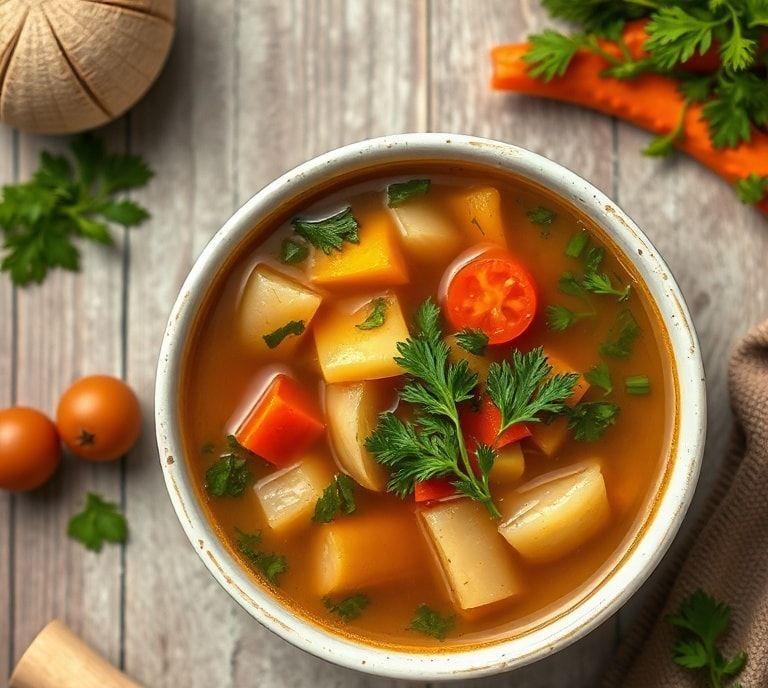
This recipe is versatile, simple, and almost foolproof. It’s designed to highlight the natural sweetness and depth of vegetables while giving you a rich, hearty stock without added preservatives or sodium.
Ingredient List
For a basic slow cooker vegetable stock, gather the following:
-
Vegetables
- 2-3 large carrots, roughly chopped
- 2-3 celery stalks, roughly chopped
- 1 large onion, quartered
- 4-5 garlic cloves, smashed
-
Optional Flavor Boosters
- 1 leek (white and light green parts only), cleaned and chopped
- 1-2 tomatoes, quartered (adds subtle sweetness and umami)
- 1-2 parsnips or turnips, chopped (adds depth)
-
Herbs
- 2-3 sprigs fresh thyme
- 2-3 sprigs fresh parsley
- 1-2 bay leaves
-
Spices (optional)
- 5-6 whole peppercorns
- A pinch of dried rosemary or sage
-
Liquids
- 8 cups cold water (or enough to cover the vegetables in the slow cooker)
Tip: Avoid starchy vegetables like potatoes or strong-flavored ones like broccoli for stock, as they can make the liquid cloudy or overly bitter.
Instruction Guide
Here’s how to create your slow cooker vegetable stock, step by step:
-
Prep The Vegetables
- Wash all vegetables thoroughly.
- Roughly chop them; no need for perfection since you’ll be straining the stock later.
- Smash garlic cloves to release more flavor.
-
Layer The Slow Cooker
- Place harder vegetables (carrots, celery, parsnips) at the bottom.
- Add softer vegetables and aromatics on top.
- Scatter herbs and spices evenly.
-
Add Water
- Pour cold water over the vegetables until they are just covered. Avoid overfilling.
-
Cook Low And Slow
- Set the slow cooker on low heat for 8-10 hours.
- Alternatively, 4-6 hours on high works in a pinch.
- No stirring needed-let the slow cooker do its magic.
-
Strain The Stock
- Using a fine-mesh sieve or cheesecloth, strain the liquid into a large bowl or pot.
- Press down on solids gently to extract every bit of flavor.
-
Cool And Store
- Let the stock cool to room temperature.
- Store in airtight containers in the fridge for up to 5 days or freeze for up to 3 months.
Ingredient Swaps
If you don’t have the exact vegetables or herbs listed, don’t worry! Here are some common swaps:
- Carrots: Sweet potato, pumpkin, or parsnips
- Celery: Fennel stalks, green bell pepper, or celery root
- Onion: Shallots, leeks, or even a pinch of onion powder (in a pinch)
- Garlic: Garlic powder or roasted garlic
- Herbs: Fresh or dried rosemary, sage, dill, or tarragon
- Peppercorns: Crushed red pepper for a spicy twist or white peppercorns
Pro tip: Keep a small bag of vegetable scraps in the freezer-onion peels, carrot tops, celery leaves-and use them for stock later. Zero waste, maximum flavor.
Helpful Tips
- Avoid strong-flavored vegetables like broccoli, cabbage, or Brussels sprouts-they can make your stock bitter.
- Do not over-salt the stock; it’s better to season dishes later.
- Roasting vegetables first adds a deeper, caramelized flavor. Simply toss them in a bit of oil and roast at 400°F for 20-30 minutes.
- Skim foam occasionally if you want a clearer stock, although slow cookers usually produce very little foam.
- Freeze in portions: Ice cube trays are perfect for 1/2 cup portions for sauces or small recipes.
Customization Ideas
Your stock can be tailored to any cuisine or flavor profile:
- Asian-inspired: Add ginger slices, scallions, and a splash of soy sauce at the end.
- Mediterranean: Include roasted tomatoes, fennel, oregano, and a pinch of saffron.
- Hearty and savory: Add mushrooms and a splash of balsamic vinegar for depth.
- Herbal and aromatic: Add fresh basil, cilantro, or dill after cooking for a fresh punch.
Don’t be afraid to experiment-the beauty of vegetable stock is that it adapts to whatever you have on hand.
FAQs
What Vegetables Are Best For Making Slow Cooker Vegetable Stock?
Root vegetables like carrots, celery, and onions are ideal, along with garlic, leeks, parsnips, mushrooms, and herbs like thyme, parsley, and bay leaves. Avoid starchy vegetables such as potatoes and strong-flavored vegetables like broccoli, which can overpower the stock.
Do I Need To Peel The Vegetables For Slow Cooker Stock?
Peeling is optional. Many cooks leave skins on onions, carrots, and garlic for extra flavor and color. Just ensure all vegetables are thoroughly washed to remove dirt and pesticides.
How Long Should I Cook Vegetable Stock In A Slow Cooker?
Vegetable stock can be cooked on low heat for 6 to 10 hours. Cooking on high for 3 to 4 hours is possible, but slow, long cooking enhances flavor extraction and produces a richer stock.
Should I Add Salt To My Slow Cooker Vegetable Stock?
It is recommended not to add salt during cooking. Leaving it unsalted allows you to control seasoning later when using the stock in recipes, as adding salt early can make it too concentrated.
Can I Freeze Slow Cooker Vegetable Stock?
Yes, vegetable stock freezes well. Cool completely, then store in airtight containers or freezer-safe bags. It can be kept in the freezer for up to 3 months. Consider portioning it in ice cube trays for convenient small servings.
Do I Need To Strain The Stock After Cooking?
Yes, straining is recommended to remove all vegetable solids. Use a fine-mesh strainer or cheesecloth. Pressing vegetables lightly can extract extra flavor, but avoid overdoing it to prevent cloudiness.
Can I Use Vegetable Scraps For Slow Cooker Stock?
Absolutely. Onion skins, carrot peels, celery leaves, mushroom stems, and other vegetable remnants can enhance flavor. Avoid using spoiled or bitter vegetables, as they can negatively affect the stock.
How Can I Make My Slow Cooker Vegetable Stock More Flavorful?
Roasting vegetables before adding them to the slow cooker deepens flavor. Adding herbs, a splash of tomato paste, or dried mushrooms can also enhance richness. Slow, low-temperature cooking helps extract maximum flavor.
Is It Necessary To Cover The Slow Cooker While Making Vegetable Stock?
Yes, covering the slow cooker is important. It prevents evaporation, ensures even cooking, and retains aromatic compounds. If the lid is slightly ajar, the stock may reduce faster, but you risk losing flavor.
Can I Use This Slow Cooker Vegetable Stock As A Base For Soups And Sauces?
Yes, homemade vegetable stock is a versatile base for soups, stews, sauces, risottos, and even cooking grains. Its rich flavor enhances dishes and provides a healthier, preservative-free alternative to store-bought stock.