Slow Cooker Vegetarian Stew Recipe (Guide)
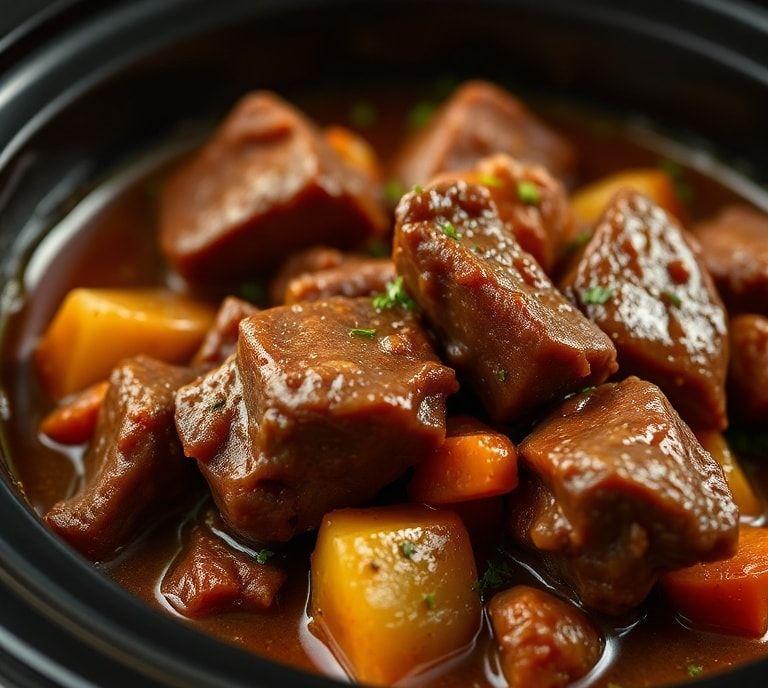
Let’s talk comfort food-the kind that warms your soul, fills your kitchen with irresistible aromas, and leaves you feeling completely satisfied without a hint of guilt. That’s where a slow cooker vegetarian stew comes in. This is not your average ’just throw some veggies in a pot’ recipe; it’s a labor-free, flavor-packed experience that turns simple ingredients into something extraordinary.
Whether you’re a busy professional who wants dinner ready when you walk in the door, a student looking for budget-friendly nourishment, or someone simply craving a hearty meal, this stew is your new best friend. Slow cooking allows flavors to meld over hours, producing a rich, complex taste profile that stovetop or oven cooking just can’t compete with. And the best part? It’s completely customizable, so you can make it exactly how you like it every single time.
Slow Cooker Vegetarian Stew Recipe
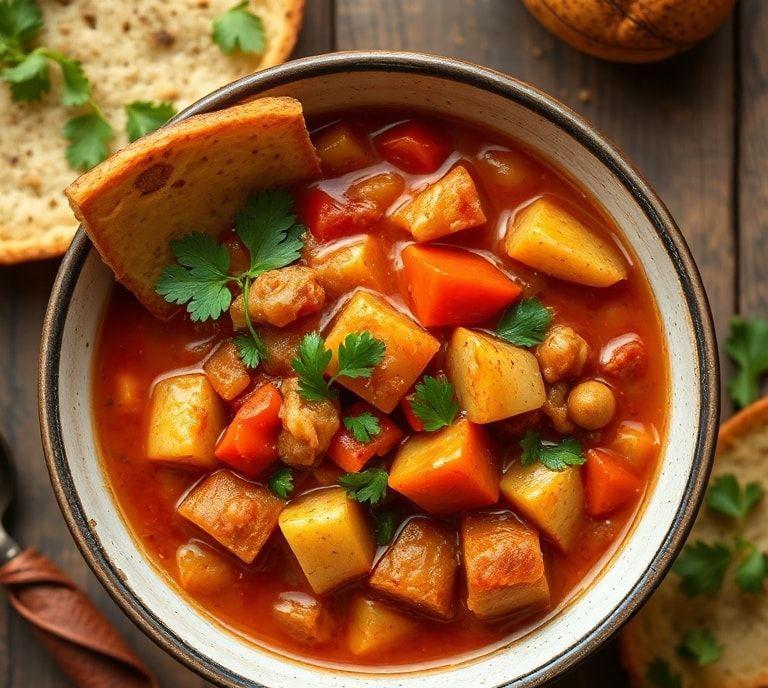
Imagine walking into your kitchen and being greeted by the savory aroma of slow-cooked vegetables, herbs, and spices mingling together perfectly. The texture is silky yet hearty, the broth robust, and every bite feels like it was cooked with care over hours. This slow cooker vegetarian stew is a balance of:
- Deep, earthy flavors from root vegetables and legumes
- Freshness from herbs and seasonal vegetables
- A touch of warmth from spices like paprika or cumin
- Hearty satisfaction from beans, lentils, or potatoes
It’s perfect for chilly evenings, batch cooking, or simply impressing yourself with how effortlessly tasty plant-based meals can be.
Ingredient List
Here’s the treasure trove of ingredients that make this stew so irresistible:
-
Vegetables
- 2 large carrots, chopped
- 2 celery stalks, chopped
- 1 large onion, diced
- 2-3 cloves garlic, minced
- 1 red bell pepper, chopped
- 2 medium potatoes, diced
- 1 zucchini, chopped
-
Legumes & Protein
- 1 can (15 oz) chickpeas, drained and rinsed
- 1 can (15 oz) cannellini beans, drained and rinsed
- Optional: ½ cup cooked lentils for extra protein
-
Liquids & Broth
- 4 cups vegetable broth (low sodium if preferred)
- 1 cup water or additional broth
- 1 can (14 oz) diced tomatoes
-
Herbs & Spices
- 2 tsp dried thyme
- 1 tsp dried rosemary
- 1 tsp smoked paprika
- ½ tsp cumin
- Salt and pepper to taste
- Optional: pinch of red pepper flakes for heat
-
Other Flavor Enhancers
- 1-2 tbsp olive oil
- 1 tsp balsamic vinegar (optional, added at the end for brightness)
- Fresh parsley or cilantro for garnish
Instruction Guide
Now, let’s break down the steps so you can follow along without a hitch:
- Prep the vegetables: Wash, peel, and chop all your vegetables into bite-sized pieces. Uniform sizes ensure even cooking.
- Sauté aromatics (optional): For deeper flavor, heat olive oil in a skillet and sauté onions, garlic, and bell pepper for 3-5 minutes before adding to the slow cooker.
-
Layer Ingredients In Slow Cooker
- Start with root vegetables like carrots, potatoes, and celery
- Add softer vegetables like zucchini and bell pepper
- Add beans and legumes on top
- Sprinkle in herbs and spices evenly
- Add liquids: Pour in vegetable broth and diced tomatoes. Give it a gentle stir to combine without breaking up the vegetables.
-
Slow Cook
- On low: 6-8 hours
-
On high: 3-4 hours
Cooking longer on low allows flavors to deepen and vegetables to become tender.
- Adjust seasonings: About 30 minutes before serving, taste and adjust salt, pepper, and any additional spices.
- Finish with brightness: Stir in balsamic vinegar or fresh herbs just before serving for a fresh lift.
Ingredient Swaps
Flexibility is key in a stew. Here’s how to mix and match depending on what’s in your pantry or seasonal produce:
- Root vegetables: Sweet potatoes, parsnips, or turnips instead of regular potatoes and carrots
- Legumes: Kidney beans, black beans, or green lentils instead of chickpeas or cannellini beans
- Broth: Mushroom or miso broth for an umami twist
- Greens: Spinach, kale, or Swiss chard can be added in the last 15-20 minutes of cooking
- Spices: Curry powder, coriander, or turmeric for a global flavor profile
Helpful Tips
These insider tips will make your stew even better:
- Don’t overfill: Leave some space in the slow cooker for the liquid to circulate.
- Cut veggies evenly: Ensures uniform cooking.
- Layer carefully: Harder vegetables at the bottom, softer on top.
- Taste and adjust: Slow cookers can vary in heat; always check seasoning before serving.
- Make ahead: This stew tastes even better the next day as flavors continue to meld.
Customization Ideas
Here’s where you can truly make it your own:
- Add grains: Stir in cooked quinoa, barley, or farro for extra heartiness.
- Make it creamy: Add a splash of coconut milk or a dollop of cashew cream for richness.
- Spicy kick: Include a diced chili or extra paprika for heat.
- Garnish game: Toasted nuts, seeds, or crumbled feta (if not strictly vegan) add texture and flavor.
- Seasonal swaps: Pumpkin or butternut squash in fall, asparagus or peas in spring.
FAQs
What Are The Key Ingredients For A Slow Cooker Vegetarian Stew?
A typical slow cooker vegetarian stew includes a mix of vegetables such as carrots, potatoes, celery, and bell peppers, along with beans or lentils for protein, vegetable broth for the base, and seasonings like garlic, thyme, rosemary, salt, and pepper. Optional additions include tomatoes, mushrooms, or leafy greens.
Can I Use Frozen Vegetables In A Slow Cooker Vegetarian Stew?
Yes, frozen vegetables can be used. However, because frozen vegetables release more water, it is recommended to reduce the amount of broth slightly to prevent the stew from becoming too watery.
How Long Should I Cook A Vegetarian Stew In A Slow Cooker?
Cooking times vary depending on the slow cooker and the ingredients, but generally, a vegetarian stew should be cooked on low for 6 to 8 hours or on high for 3 to 4 hours until the vegetables are tender and flavors are well blended.
Can I Add Grains Like Rice Or Barley To A Slow Cooker Vegetarian Stew?
Yes, grains can be added, but it is best to add them during the last 30 to 60 minutes of cooking to prevent them from becoming too soft or mushy. Pre-soaking certain grains, like barley, can also help maintain texture.
How Can I Thicken A Slow Cooker Vegetarian Stew?
To thicken the stew, you can mash a portion of the cooked vegetables and stir them back in, add a slurry of cornstarch or flour mixed with water, or incorporate cooked lentils, which naturally thicken the stew as they break down.
Is It Necessary To Sauté Vegetables Before Adding Them To The Slow Cooker?
Sautéing vegetables is optional. It can enhance the flavor by caramelizing sugars and adding depth, but the slow cooking process will still cook raw vegetables thoroughly and develop good flavor without sautéing.
Can I Make A Slow Cooker Vegetarian Stew Ahead Of Time?
Yes, slow cooker vegetarian stew can be made ahead of time. It can be stored in the refrigerator for 3-4 days or frozen for up to 2-3 months. Reheat gently on the stovetop or in the microwave.
What Are Some Protein-rich Options For A Vegetarian Slow Cooker Stew?
Protein-rich options include canned or cooked beans like chickpeas, black beans, or kidney beans, lentils, tofu cubes, tempeh, or seitan. These ingredients add both nutrition and texture to the stew.
How Can I Enhance The Flavor Of A Slow Cooker Vegetarian Stew?
Flavor can be enhanced by adding aromatics like garlic, onions, and herbs early, using umami-rich ingredients like soy sauce, miso, or tomato paste, and seasoning to taste with salt, pepper, and spices such as paprika, cumin, or chili flakes.
Can I Make This Stew Vegan And Gluten-free?
Yes, a slow cooker vegetarian stew can easily be vegan and gluten-free by ensuring that all ingredients, such as vegetable broth and soy sauce, are free of animal products and gluten. Use tamari instead of regular soy sauce for a gluten-free option.